3kW Solar System in Kashmir - Is It Right for Your Home?
First things first – what exactly does a complete setup for 3kW solar in Kashmir consist of? Typically, you will get high-efficiency Mono PERC or TOPCon bifacial solar panels, along with either a grid-tied or hybrid string inverter. Heavy-duty elevated mounting structures are put into place alongside AC/DC distribution boxes (ACDB/DCDB) with Surge Protection Devices (SPDs), and specialized weather-resistant outdoor wiring.
So how much energy can be expected from such a system? Based on typical daylight levels in Srinagar, around 12 to 15 units (kWh) of power can be produced every day by a 3kW system, resulting in 360 to 450 units monthly!
Household Load Matrix - 3kW Solar Kashmir
| Appliance Type | Quantity Supported Simultaneously |
|---|---|
| LED Bulbs & Tube Lights | 12 to 18 lights |
| Ceiling Fans | 4 to 6 fans |
| Television & Setup Box | 2 Smart TVs |
| Refrigerator | 1 Double Door Unit |
| Washing Machine / Water Pump | 1 Unit (1 HP Pump or Semi-Automatic Washer) |
| Laptops & Mobile Chargers | Multiple devices |
A 3kW capacity comfortably powers the daily needs of a standard 3 to 4-bedroom house, keeping grid charges minimal even during peak consumption hours.
Calculate your load here with our advanced calculator to determine your preferred capacity.
Breakdown: 3kW Solar Panel Price in Kashmir
Understanding your upfront costs will help you plan an efficient installation. The initial cost of setting up depends on how you configure your solar system – whether On-Grid or Hybrid (with battery backup):
- On-Grid System (3kW): ₹1,55,000 – ₹1,85,000 (Before Subsidy)
- Hybrid / Off-Grid System (3kW with Lithium Storage): ₹2,40,000 – ₹2,90,000
Under the PM Surya Ghar scheme coupled with J&K UT Top-Up Subsidies, residential users are eligible for significant financial aid:
- Central Government Subsidy: ₹78,000 (Capped at ₹30,000/kW for first 2kW + ₹18,000 for 3rd kW)
- J&K UT Top-Up Subsidy: ₹16,800 (₹3,000/kW extra support)
- Total Financial Assistance: Up to ₹94,800
Price Comparison Table for 3kW Solar System Srinagar Installations
| System Component / Details | Without Subsidy | With PM Surya Ghar & UT Subsidy |
|---|---|---|
| System Capacity | 3 kW On-Grid | 3 kW On-Grid |
| Estimated System Cost | ₹1,65,000 | ₹1,65,000 |
| Government Financial Support | ₹0 | Up to ₹94,800 |
| Net Out-of-Pocket Cost | ₹1,65,000 | ₹70,200 – ₹85,000 |
| Average Payback Period | 6–7 Years | 3–4 Years |
N-type TOPCon panels cost a little more than other technologies – which you offset with superior generation on overcast winter days. Furthermore, heavy-duty hot-dip galvanized mounting structures designed to withstand heavy alpine snowpack cost slightly more than basic frames but ensure long-term structural protection.
How Solar Panels Perform in Kashmiri Winters
Photovoltaic technology operates with high efficiency in low ambient temperatures because cold weather prevents internal electrical resistance from overheating solar cells.
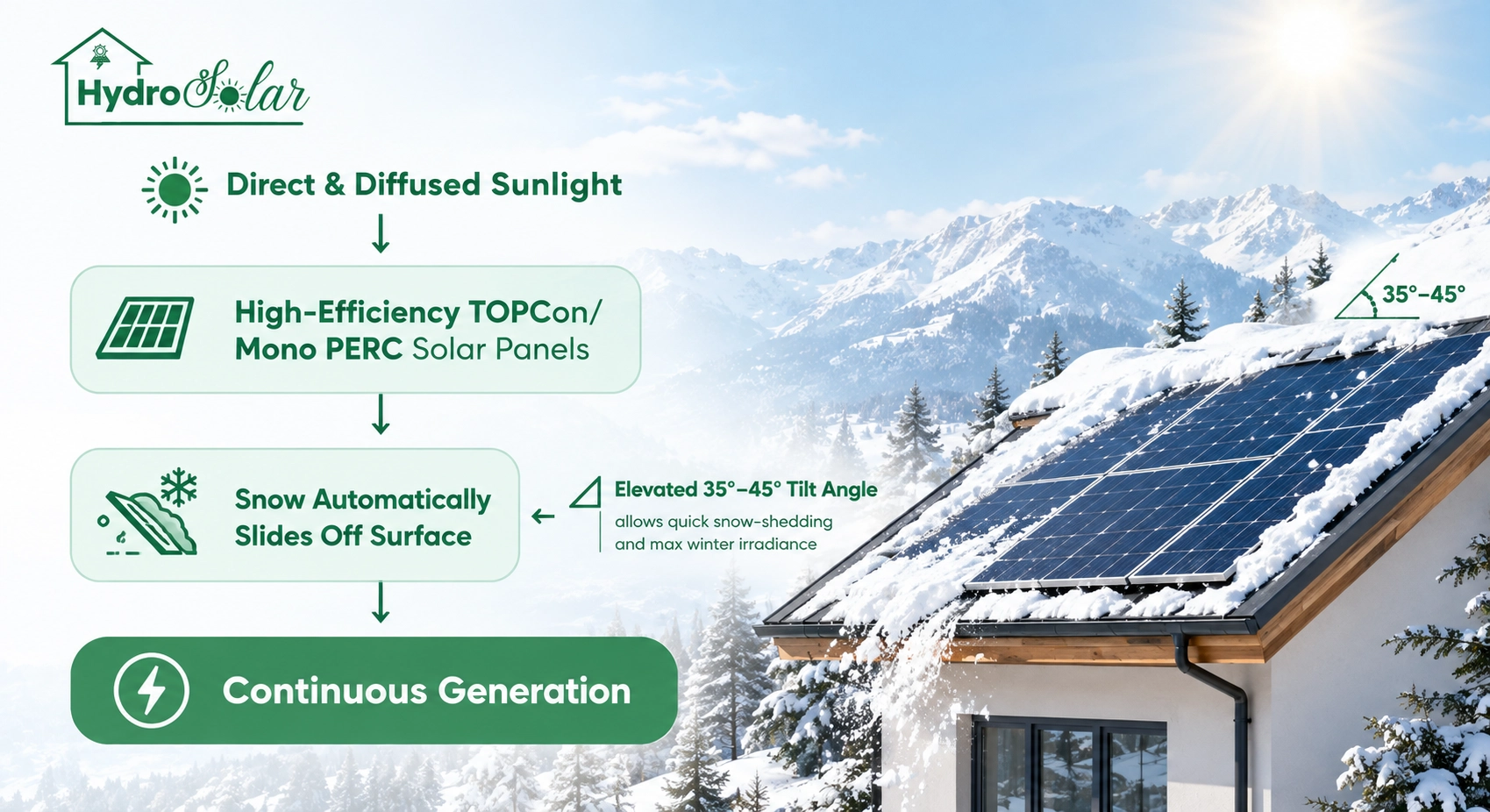
An elevated tilt angle between 35° and 45° lets snow slide off smooth tempered glass surfaces automatically. Even during severe cloud cover, modern solar cells continue generating power from diffused winter sunlight.
Although an on-grid system will slash your power bill during summer, you need to plan for backup during winter grid outages.
Also read in detail about: Is Solar Worth It In Kashmir’s Climate?
For complete energy independence during severe Kashmiri winters, we recommend a 3kW hybrid solar system with battery storage. This keeps critical lighting and appliances running continuously even during grid shutdowns.
How to Apply for Solar Subsidy in J&K (Step-by-Step)
Claiming government financial support involves registering through official portals:
- Step 1 - National Portal Registration: Register on the official PM Surya Ghar portal using your mobile number and KPDCL consumer ID.
- Step 2 - Select Empaneled Vendor: Choose an approved local vendor working in Jammu & Kashmir.
- Step 3 - Feasibility Inspection: KPDCL officials conduct technical checks to approve rooftop eligibility.
- Step 4 - Installation & Net Metering: Your vendor installs snow-rated structures and equipment, followed by net-meter commissioning by DISCOM officials.
- Step 5 - Direct Subsidy Credit: Post-commissioning approval, central and UT subsidy funds are transferred directly into your linked bank account via Direct Benefit Transfer (DBT) within 30 days.
For detailed instructions on How to Apply for Solar Subsidy in J&K, read here.
Why Choose HydroSolar?
Alpine conditions demand specialized local engineering. HydroSolar builds custom renewable energy systems specifically crafted for high-altitude climates, severe snowfall, and fluctuating temperatures:
- Local Alpine Expertise: Custom-engineered roof mounts rated to support heavy snow loads and high wind speeds without risking roof structure.
- Empaneled Partner Status: End-to-end management of KPDCL documentation, net metering applications, and direct subsidy tracking on your behalf.
- Snow-Rated Hardware: Premium TOPCon & Mono PERC glass-to-glass panels built with heavy-gauge anti-corrosive aluminum framing.
- Turnkey Service: From initial site survey through long-term operational maintenance, our Srinagar technical teams manage your entire solar journey.
Conclusion
Upgrade to a 3kW solar system in Kashmir for maximum financial savings and seasonal reliability. Government subsidies cover a major portion of upfront costs, so your system pays for itself within 3 to 4 years while supplying free solar power for 25+ years.
Ready to cut your electricity bills forever? Contact the HydroSolar team today for a free on-site roof assessment and custom quotation.