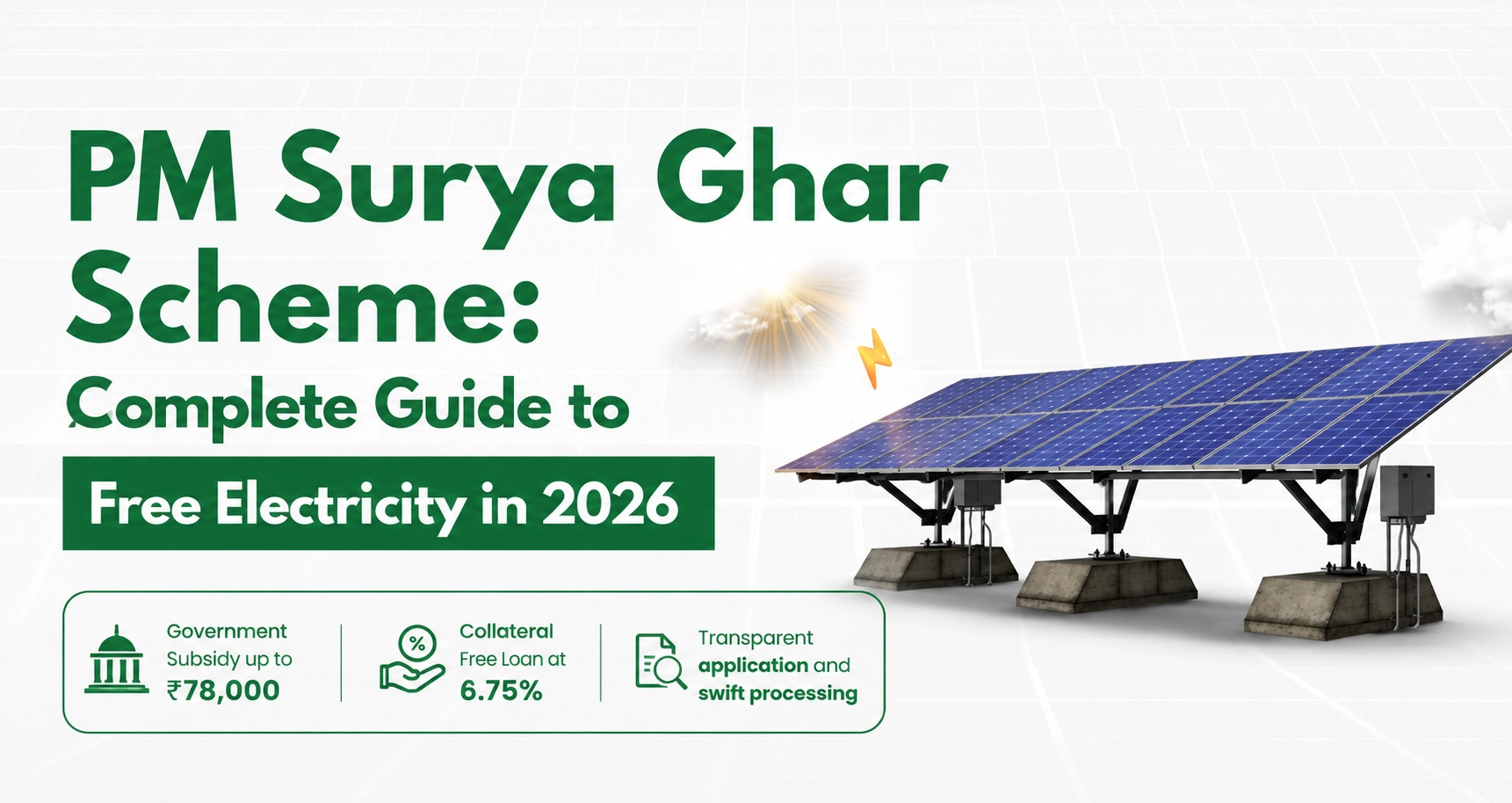
What is the PM Surya Ghar Scheme?
The PM Surya Ghar scheme was launched in Feb 2024 by the central Government of India for promoting Rooftop solar adoption across the Residential households in India.
The objective behind this scheme is to supply Free Electricity (upto 300 Units per Month) to 1 Crore Households by 2027 so that they can reduce their dependency upon Conventional /Coal based Power Grids. Also, By Installing Grid-Connected Rooftop Solar System, You are Not Only Saving Money but also Contributing your Part Toward India's Green Energy Mission!
Key Benefits of the PM Surya Ghar Scheme
- Massive Cost Savings: Drastically reduce/ eliminate your monthly electricity bills.
- Direct Financial Subsidy: Receive substantial central government financial assistance, into your bank account through Direct Benefit Transfer (DBT).
- Energy Independence: Generate your own clean power. Potentially also earn by selling surplus energy back to the grid through net metering system.
- Increased Property Value: Homes with solar installations are viewed as modern, sustainable, and cost-efficient, making them much more valuable.
PM Surya Ghar Scheme Subsidy Structure (2026 Updated)
The government utilizes a "slab-based" subsidy model to encourage small-scale residential adoption. The subsidy is calculated based on the capacity of the solar system installed, capped at a maximum limit.
| System Capacity | Central Subsidy Amount |
|---|---|
| Up to 2 kW | ₹30,000 per kW |
| Additional capacity up to 3 kW | ₹18,000 per additional kW |
| 3 kW and above (Max Cap) | ₹78,000 (Fixed) |
Note: while we're talking about subsidies that make solar installation cheaper for homeowners, these come with caps. For example, if you choose between a 3kW or a 10kW solar power system, the central government's contribution will be capped at just ₹78,000 regardless of what you end up choosing.
But again, many Indian states do provide top-ups over this figure-called Generation Based Incentives (GBI). This can raise your overall ROI significantly!
Read about 1 kW Solar Panel Price Government Subsidy: Complete 2026 Guide | Read about 3 kW Solar Panel Price in India: Complete 2026 Guide | Read about 5 kW Solar Panel Price in India: 2026 ROI Guide
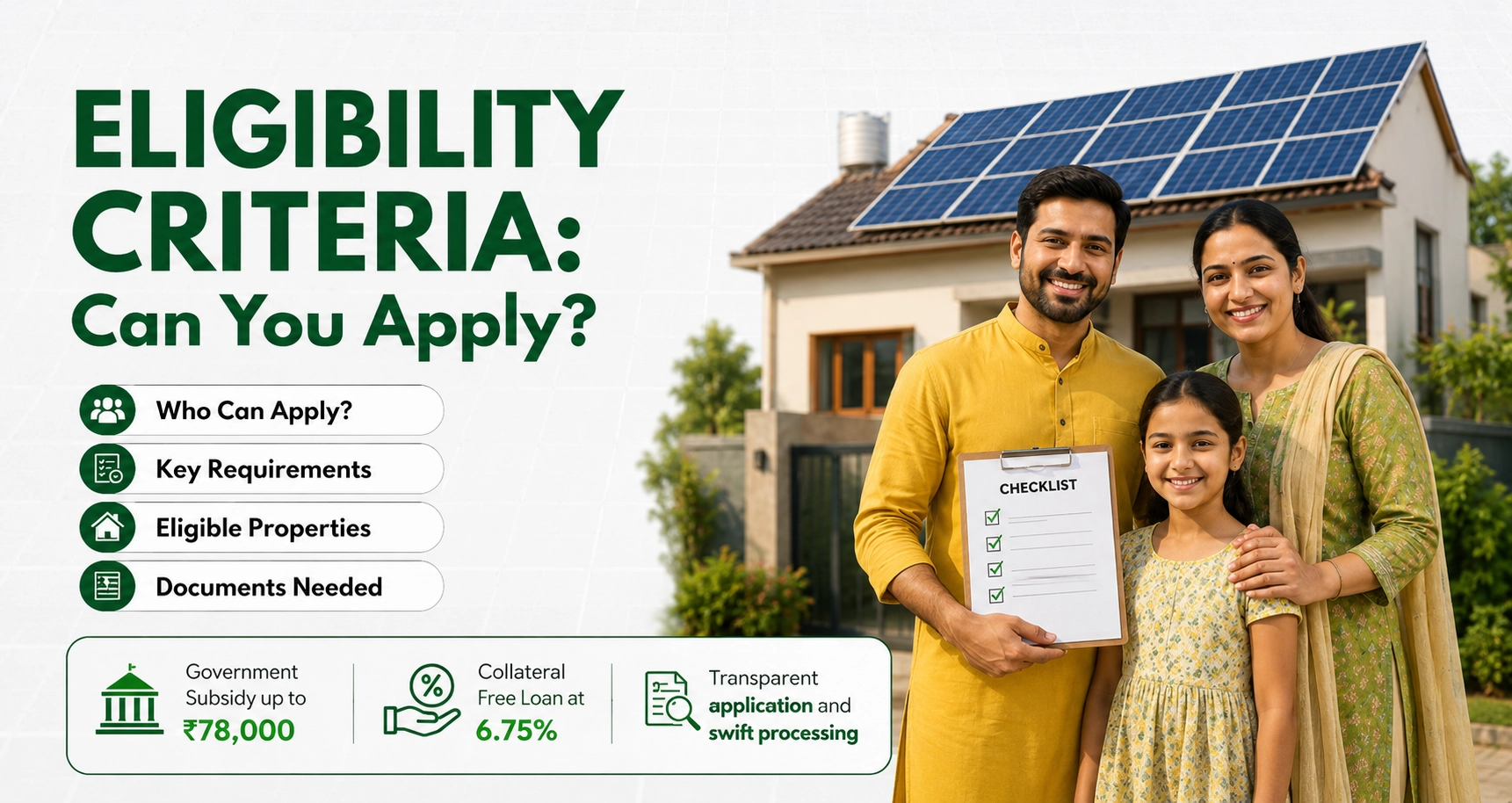
Eligibility Criteria: Can You Apply?
To qualify for the PM Surya Ghar scheme subsidy, you must meet the following basic requirements:
- Ownership: You must be a residential home-owner with an active, electricity connection.
- Consumer Category: The connection must be under the Domestic/ LT-Residential category only.
- Space: You need adequate, open/ shadowfree rooftop space (around 100 sq. ft. per kW).
- Documentation: You must have an Aadhaar card linked to your bank account for the DBT process.
- Previous Subsidies: You shouldn’t have availed any other central-government solar subsidy for the same house/area.
How to Apply for the PM Surya Ghar Scheme
Applying for the scheme is a streamlined, digital-first process. Follow these steps to get started:
- 1. Registration: Under 5 minutes. Visit the official national portal at pmsuryaghar.gov.in. Select your state, electricity distribution company (DISCOM), and enter your consumer number, mobile number, and email ID.
- 2. Apply for Rooftop Solar: Post-login. Log in using your registered mobile number. Fill out the application form for the rooftop solar system and wait for the feasibility approval from your DISCOM.
-
3. Installation: Use Empanelled Vendors. Once
approved, get the plant installed through an MNRE-empanelled
vendor.
Note: Always use ALMM-listed (Approved List of Models and Manufacturers) panels to avoid subsidy rejection. - 4. Net Metering & Inspection: Verification. After installation, apply for a net meter through the portal. A DISCOM official will visit to inspect the site and verify the installation.
- 5. Subsidy Disbursement: 30–45 days post-inspection. Once the commissioning report is generated, upload your bank account details and a cancelled cheque on the portal. The subsidy will be credited directly to your bank account.
Learn how to apply solar subsidy J&K in our detailed guide here.
Frequently Asked Questions (FAQs)
1 kW system: ₹30,000
2 kW system: ₹60,000
3 kW system and above: Fixed max cap of ₹78,000
Note: Several individual states offer additional state-level additional subsidies.
Conclusion: Take Control of Your Energy Future Today
The PM Surya Ghar: Muft Bijli Yojana is a game-changer for Indian homeowners. With upfront central subsidies covering up to ₹78,000, concessional loan options, and state-backed net metering incentives, solar energy has evolved from a luxury investment into a practical financial strategy.
Installing a rooftop solar unit doesn’t just safeguard your household against rising electricity tariffs - it pays for itself in 3 to 4 years while yielding 20+ years of practically free power.
Ready to Go Solar?
The path to free electricity starts with a single step. Don't let your rooftop go to waste - turn it into an asset that powers your home and saves you money every single month.
Contact HydroSolar.in today for a free site assessment and customized proposal!