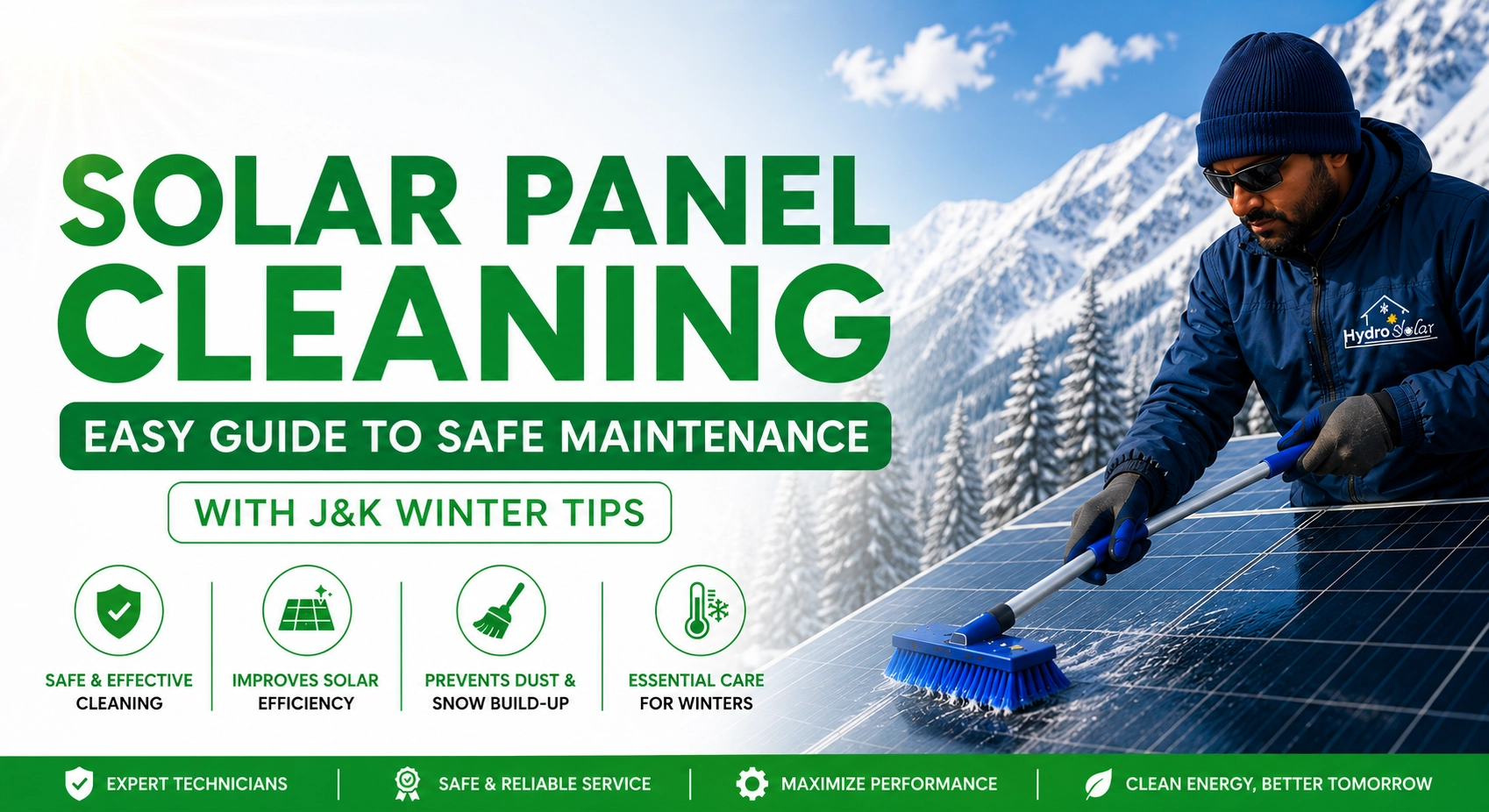
Why Regular Solar Panel Cleaning Is Important
When dirt or snow accumulates over your solar panels, sunlight cannot pass through to reach the silicon cells underneath. Common causes of dirt accumulation include Dust and pollen which accumulate quite often during the dry months in places such as Jammu.
Similarly, if you live in an area with high levels of pollutants, your solar panels may be accumulating some soot particles too. These will settle rapidly over the panels' surface in an urban or agricultural region. Bird droppings are highly opaque & acidic - creating severe hotspots that can permanently degrade individual cells if they remain on them for too long.
In cold regions around Kashmir, thick accumulations of snow block all light from reaching your solar panels - dropping your daily power production down to almost zero until the accumulation clears up. Keeping your system regularly clean will ensure that you maintain energy generation at peak. It will also help prolong your equipment’s operational lifespan.
When Is the Best Time to Clean Your Solar Panels?
Timing matters just as much as technique when knowing how to clean solar panels.
- Never Clean Hot Solar Glass Under Direct Sunlight - It's important to avoid cleaning your solar panels early morning/late afternoon as well. Doing this could lead to some sort of thermal shock because of cold water spray on hot solar panel surfaces. And that might crack tempered glass instantly.
- Clean Right After Pollen Season In Spring & Right Before First Snowfall In Autumn - Cleaning your solar panels during these times will help you get rid off all kind of accumulated dusts & debris easily.
- Check Your Panels After Major Dust Storm/Heavy Autumn Leaf Drop/Major Snowfall Event - It goes without saying that inspecting your solar panel post any weather event would keep your system running smoothly for long.
Safe Solar Panel Cleaning Methods: Step-by-Step DIY Guide
You do not need expensive equipment for effective solar panel maintenance at home. Here is a safe, straightforward cleaning process.
Step 1:- Prioritize Safety First
- Always Use A Telescopic Extension Pole From The Ground Or Secure Ladder - In order to safely access solar panels installed on a steep/slippery roof and/or high from ground you'll need to always use a telescopic extension pole (from the ground) or secure ladder.
- Never Walk On Panels - Remember that solar panels aren't designed for holding human weight. In fact, walking over panels will create micro-fractures within its internal silicon cell which may result into a void warranty.
- Turn Off the System - Before applying water, shut off your solar inverter and AC/DC isolators as a standard safety precaution.
Step 2:- Rinse Away Loose Dirt
You will want to use a standard garden hose. Simply spray the panels down using clean water. You don't want to do this with a high pressure washer because you're liable to blow your way through some of these seals and potentially damage your internal wiring.
Step 3:- Scrub Gently with Soft Equipment
Use a soft microfiber brush, non-abrasive sponge, or a dedicated solar squeegee with a telescopic pole. Use only plain tap water - although, if your local water is "hard" (high mineral content), adding some distilled will eliminate chances for hard water mineral deposits... or simply get yourself a squeegee!
Avoid harsh detergents; bleach, abrasive powders, or chemical-based glass cleaners, instead, just dilute mild/neutral soap heavily in water when working on particularly obstinate spots.
Step 4:- Squeegee or Air-Dry
You should use a soft rubber squeegee to wipe off excess water from top to bottom, & prevent water streaks and spots from drying on the glass.
How to Clear Snow Off Solar Panels in J&K
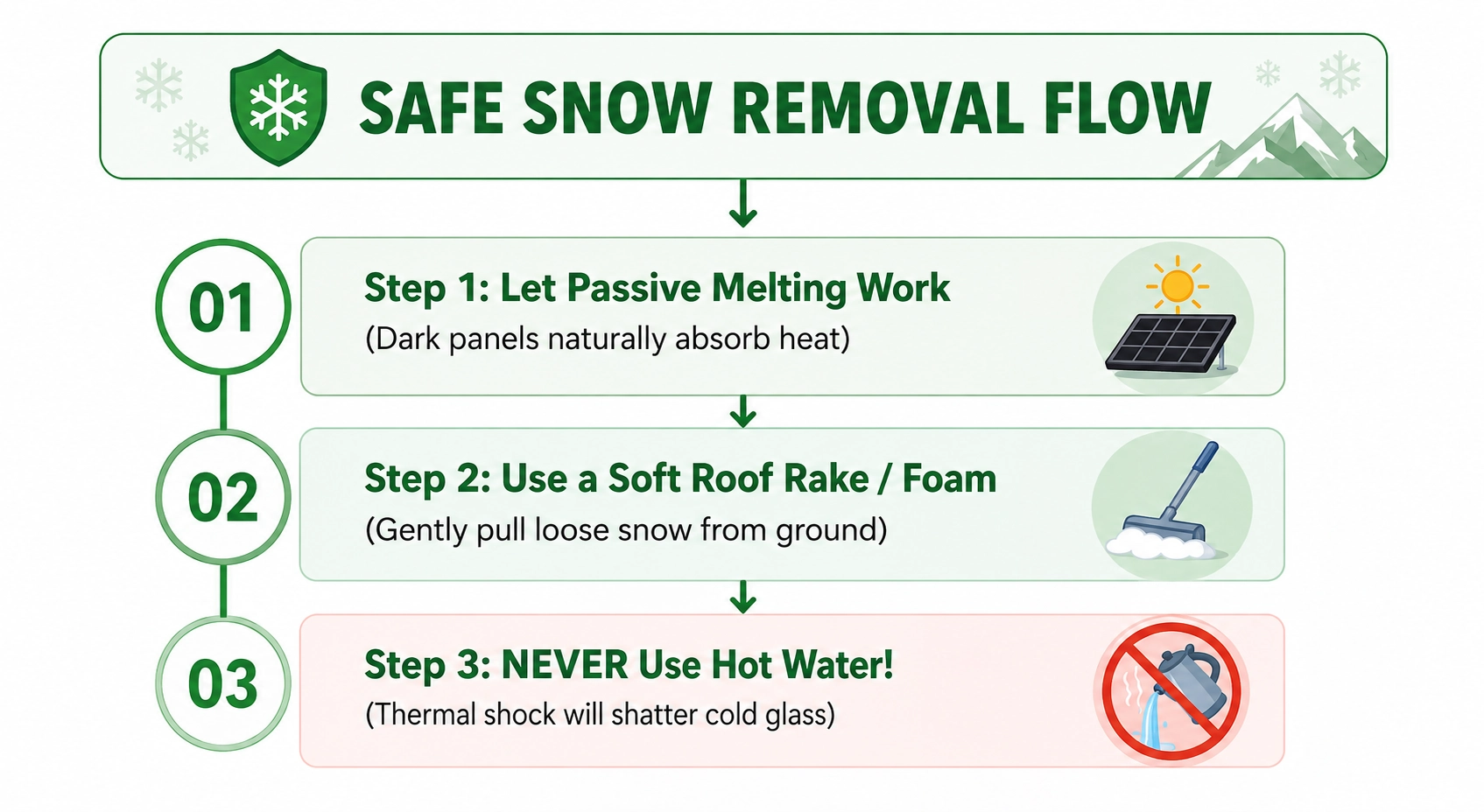
Cold weather increases solar cell efficiency for homes located in Jammu & Kashmir, Ladakh and other high altitude areas of India. But snow cover stops light dead in its tracks.
Here is how to clear snow off solar panels safely during sub-zero temperatures:
- Let the Tilt Angle Work! Most solar panels are mounted at an optimal angle (typically between 30° and 45° in northern regions), which ensures that when the sun breaks through the clouds, your dark-colored solar panels will immediately begin shedding the powder snow around them.
- When there's a thick buildup of snow on top of the panels, consider using either a soft roof rake or foam squeegee for removing it. A special type of roof rake has a soft foam or rubber head you can operate entirely from the ground. It also allows you to gently work the snow off the lower edge of your solar panels before moving up.
- NEVER pour hot water over frozen solar panels - this is probably the most important piece of advice I have to share about how to clean snow off solar panels if you live in a climate where it frequently freezes. Pouring even slightly-warm or hot water on freezing glass can cause extreme thermal shock that will instantly shatter the surface of the panel.
- Don't use metal tools & scrapers - Using an ice scraper, shovel or even using a metal pole would scratch the anti-reflective coat of the glass permanently reducing your generation capacity.
Professional vs. DIY Solar Panel Cleaning
If you're planning to tackle your rooftop cleaning tasks by yourself (DIY), that is a good option. However, it is recommend to hire professional services if:
- Your Rooftop Is Multi-Story Or Steep Without Secure Footing
- Panels Are Heavily Soiled With Industrial Soot Oil Film Or Heavy Calcification
These are typically for commercial installations - hotels, institutions or even ground-mounted arrays set up within an industrial zone.
These professional solar panel cleaners have access to deionized water systems, soft rotary brushes, as well as safety harnesses to ensure both their own protection and those of your panel warranty!
Frequently Asked Questions (FAQs)
HydroSolar.in- Premium Solar Energy Provider
If you are looking for well-engineered installation of on-grid, off-grid and hybrid solar systems in Jammu and Kashmir, you have landed in the perfect place. Learn more about PM Surya Ghar Yojana and other important information.
If you do not know about how much capacity solar power you need, Calculate your load here.
Final Thoughts
Keeping your solar system clean doesn't require much more than some good housekeeping practices and will pay big dividends with immediate increases in monthly energy production. By practicing some basic safe cleaning techniques, including climate-appropriate ones during the winter months - you can be confident in the fact that your solar investment will provide clean power efficiently for decades to come.