Modern buyers now choose between advanced passivated cells, dual-sided modules, and building-integrated photovoltaic systems. This guide breaks down every major category, comparing technical specifications, real-world performance, and local market factors to help you pick the perfect setup.
You may also check out our comprehensive guide on the Best Solar Panels for Your Home In India.
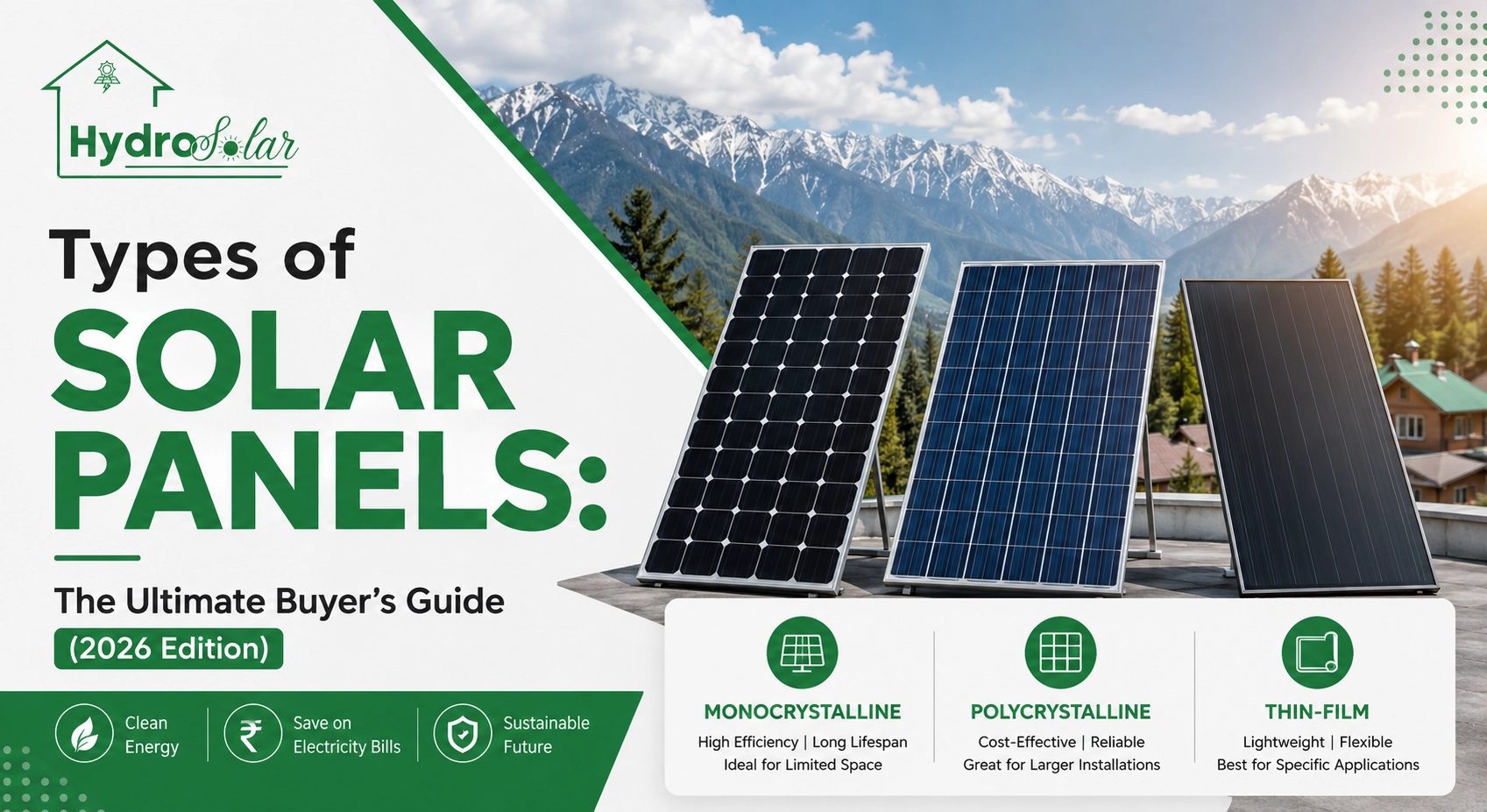
The 3 Primary Crystalline & Thin-Film Panel Technologies
Understanding the foundational core of solar PV technology is important. It helps narrow down options based on structural, budget, and space constraints.
Monocrystalline Solar Panels
Monocrystalline modules make the premium standard in residential installations. Manufacturers construct these cells from a single continuous crystal lattice of pure silicon sliced into thin wafers. Because the electrons have an unimpeded path through pure silicon, energy conversion reaches peak efficacy.
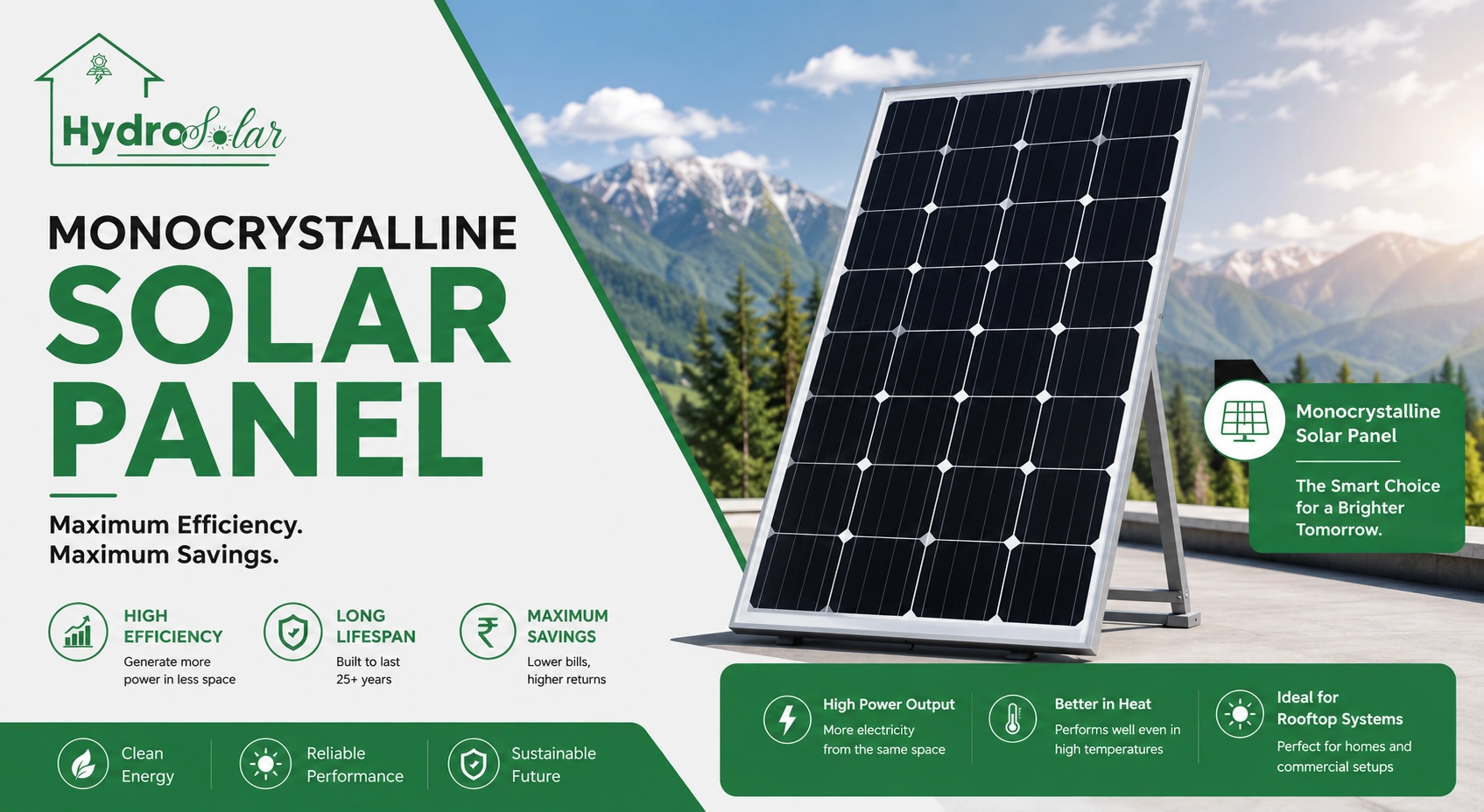
- Key Specs: High efficiency rates ranging from 19% to 22%+, sleek dark black visual appeal, and compact spatial footprint.
- Pros: Offers maximum power output per square foot, making them ideal for small roofs. Performs better in high-temperature environments compared to older alternatives.
- Cons: Highest upfront cost per watt due to complex manufacturing processes like the Czochralski method.
Polycrystalline Solar Panels
Polycrystalline modules rely on multiple silicon fragments which are melted together in cast molds rather than a single crystal structure. Once cooled, workers slice the block into wafers. The presence of internal cell boundaries creates resistance which slightly restricts electron movement.
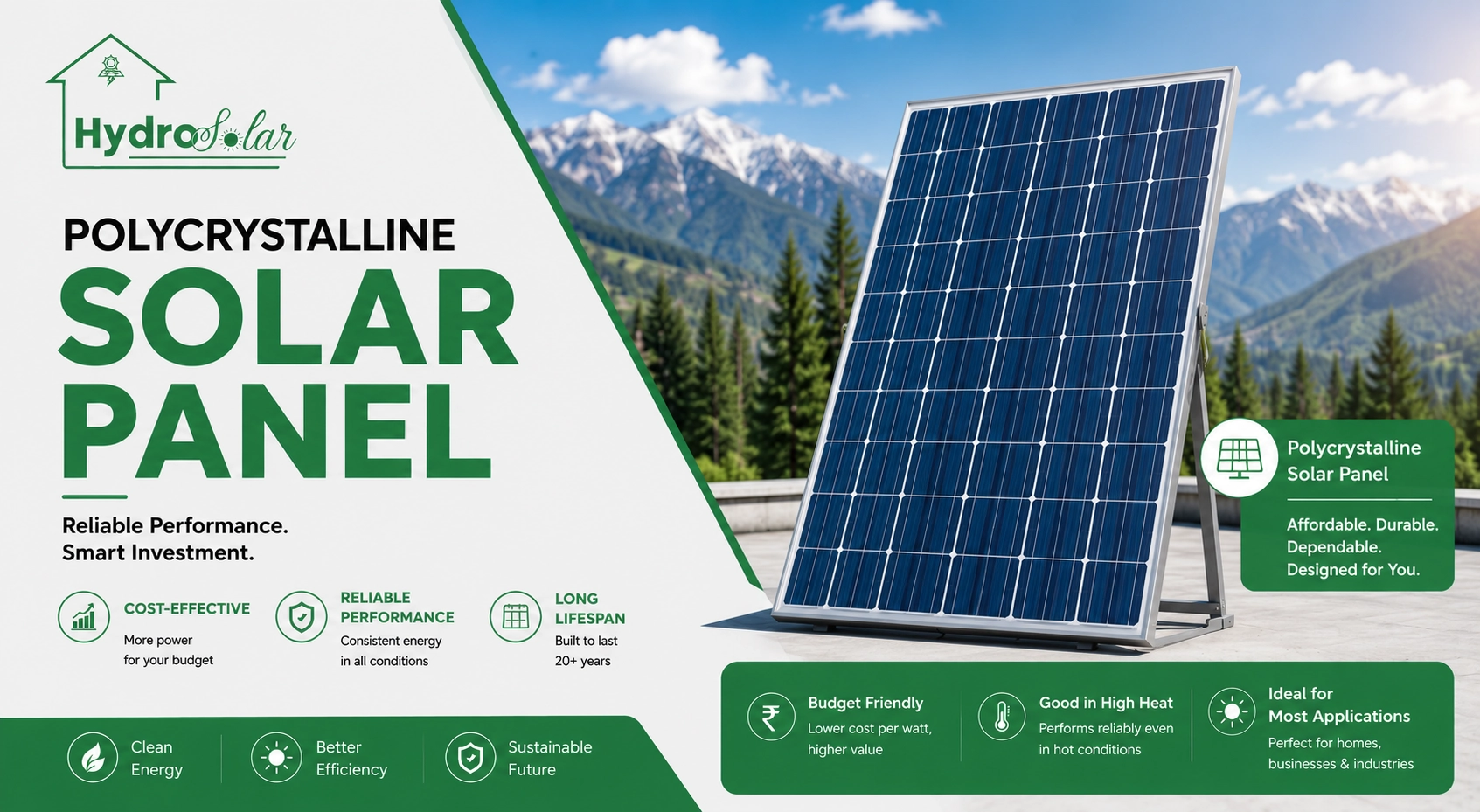
- Key Specs: Moderate efficiency between 15% and 17%, distinctive speckled blue aesthetic with a lower price point.
- Pros: Cheaper manufacturing process translates directly into lower retail cost. Great for buyers with large roofs.
- Cons: Lower efficiency means you need significantly more roof space to produce the same total wattage as monocrystalline options.
Thin-Film Solar Panels
Thin-film panels consist of thin layers of photovoltaic material, unlike the rigid sheets of silicon used for conventional solar cells. This material is deposited onto various substrates, such as glass, plastic, or metal. The most common types are based on Cadmium Telluride (CdTe), Amorphous Silicon (a-Si), or Copper Indium Gallium Selenide (CIGS).
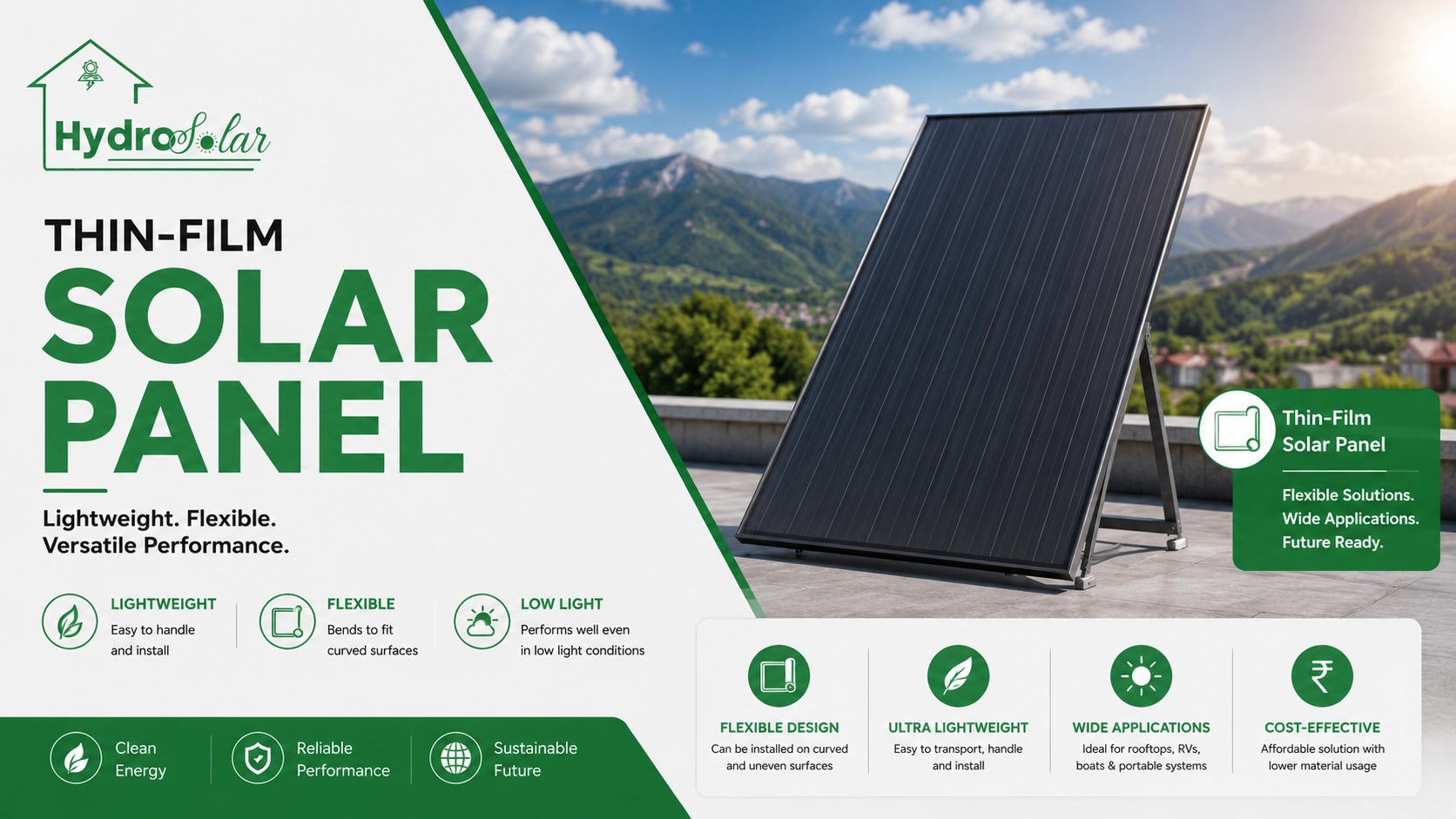
- Key Specs: Extremely flexible, ultra-lightweight design with lower efficiency ratings averaging 10% to 13%.
- Pros: Highly customizable for non-traditional installation surfaces, portable setups, and curved commercial roofs.
- Cons: Degrades quicker over time than crystalline panels and requires substantial surface area to match residential power needs.
Advanced & Next-Gen Solar Technologies
Innovation in PV design has unlocked massive efficiency gains over traditional baseline technology. Modern solar arrays frequently utilize hybrid cell architectures to push conversion limits past 24%.
Mono PERC (Passivated Emitter and Rear Cell)
Mono PERC technology adds a rear passivating layer behind the silicon cell. This extra layer reflects unabsorbed light back through the solar cell for a second absorption pass, boosting efficiency. It also reduces heat generation within the panel, allowing it to perform better under direct intense sunlight.
Bifacial Solar Panels
The panels’ ability to collect power from two sides makes them more efficient than conventional ones. Bifacial modules absorb direct sunlight with their front side, and also absorb reflected sunshine through their transparent rear glass that hits objects around the module (such as white roofs, gravel, or dirt).
Depending on the reflectivity of these surfaces, bifacial panels create an additional amount of electricity ranging from 5% to up to 25%, compared to standard single-sided modules.
TOPCon & HJT Technologies
TOPCon (Tunnel Oxide Passivated Contact) adds a thin oxide layer to reduce recombination losses. This delivers higher baseline power and superior resistance to degradation. HJT (Heterojunction) combines crystalline silicon with amorphous thin-film layers to create a hybrid panel with ultra-low temperature coefficients and efficiency exceeding 22%–24%.
Building-Integrated Photovoltaics (BIPV)
BIPV seamlessly integrates solar cells directly into building materials — such as solar roof shingles, solar glass windows, and facade cladding. Upfront costs remain high, but BIPV transforms structural elements into active power generators without altering building geometry.
Types of Solar Panels in India: Market Context & Preferences
Choosing the right different types of solar panels in regions like India requires accounting for unique climate conditions, policy mandates, and economic incentives.
The market has shifted rapidly from poly modules toward Mono PERC and TOPCon panels. High ambient summer temperatures across Northern and Central India reduce standard solar panel output. TOPCon and Mono PERC modules possess lower temperature coefficients, ensuring they lose less performance when cell heat rises above 25°C. Dust accumulation also poses an operational challenge. High-efficiency modules maximize power generation during clear windows between maintenance washings.
Another critical market factor involves DCR (Domestic Content Requirement) vs Non-DCR panels:
- DCR Panels: Solar modules manufactured using locally made solar cells and components. Government rooftop solar schemes such as PM Surya Ghar Muft Bijli Yojana strictly mandate DCR panels to qualify for federal subsidies. If you want to know more about the PM Surya Ghar Scheme, read this complete guide..
- Non-DCR Panels: Utilize imported cells that often yield slightly higher conversion rates at lower costs. Developers deploy these modules widely in commercial, industrial, and utility-scale projects where government subsidy rules do not apply.
Comparison Table: At a Glance
| Solar Panel Type | Average Efficiency | Heat Tolerance | Relative Cost | Ideal Application |
|---|---|---|---|---|
| Monocrystalline | 19% – 22% | High | High | Limited rooftop space, high energy needs |
| Polycrystalline | 15% – 17% | Moderate | Budget-friendly | Large roofs, budget-conscious setups |
| Thin-Film | 10% – 13% | Excellent | Low | Commercial sheds, portable/curved roofs |
| Mono PERC / TOPCon | 21% – 24%+ | Very High | Moderate-High | Modern residential & commercial roofs |
| Bifacial | +5% to 25% extra yield | High | High | Elevated rooftops, ground mounts, carports |
How to Choose the Right Solar Panel for Your Needs
Selecting the ideal module requires balancing roof space constraints against budget goals.
- Calculate Available Roof Area: If your rooftop space is limited, investing in high-efficiency TOPCon or Monocrystalline panels maximizes total system capacity. Large commercial roofs can go for slightly lower-cost alternatives without compromising target output.
- Evaluate Budget vs 25-Year ROI: Low upfront panel costs do not always mean long-term savings. High-efficiency modules yield more electricity per day, shortening payback periods despite higher initial capital expenditure. Calculate your solar load for free with our Solar Load Calculator.
- Assess Shading & Climate: Properties experiencing partial shading or intense summer heat benefit greatly from half-cut cell designs and Mono PERC architectures that maintain higher voltage under thermal stress.
- Inspect Warranty Terms: Look for modules that offer a 10 to 15 year product warranty along with a 25 to 30 year performance warranty. Crystalline panels typically degrade at a slow rate of roughly 0.4% to 0.55% annually.
Evaluating your daily power usage, roof dimensions, and local climate conditions will clarify the exact types of solar panels required for your energy transition.